Most dog owners don’t decide how often to scoop. It just happens whenever the yard starts to look bad, or the smell drifts through the patio door, or company is coming over on Saturday. That works until it doesn’t, and by then you’re dealing with a lot more than a quick pass with a bag.
This guide answers the practical question behind the search: how often should dog poop actually be removed from your yard? It also covers what happens when waste sits, whether weekly service is enough, how a professional dog poop scooping service works, and how it compares with doing it yourself. Where the answer depends on your situation, we’ll say so.
Quick Takeaways
- Scooping every day is the gold standard. For most homes, once a week is a reasonable minimum, not a comfortable target.
- Some parasite eggs need days to weeks to become infectious, which is one reason “get it out of the yard within a week” is a common rule of thumb.
- More dogs, puppies, kids, small yards, and hot weather all push you toward more frequent cleanup.
- Weekly service can be enough for one healthy dog. It’s often not enough for multiple dogs or heavy-use yards without a quick spot pickup in between.
- Ask any service how it disposes of waste, how it handles gates and safety, and what’s included in the price.

How Often Should Dog Poop Be Scooped From the Yard?
The short answer: as often as you can, and at minimum weekly.
Here’s a practical starting point. Adjust it for your household.
| Situation | Suggested Frequency | Why |
| One small dog, adults only, big yard | Weekly (minimum) | Lower volume, more space between piles |
| One medium or large dog | Weekly, ideally twice weekly | More waste per visit, more yard contact |
| Two or more dogs | Twice weekly, or weekly plus a midweek spot pickup | Volume adds up fast |
| Puppies or dogs with stomach issues | Daily, or as soon as possible | Higher chance of parasites, loose stool |
| Young children play in the yard | Daily, or before each play session | Kids touch grass, soil, and their mouths |
| Small yard or patio | Daily or every other day | Less room, faster exposure |
| Summer heat or monsoon season | More often than your usual schedule | Odor and flies build quickly, rain spreads waste |
This isn’t a legal standard or a veterinary rule. It’s a sensible framework. Public health sources don’t set one universal schedule, but they do agree that leaving waste on the ground creates a longer window for contamination.
A useful way to think about it: fresh waste is a nuisance and a mess. Waste that sits for days is where health and lawn problems start.
Why Regular Dog Poop Removal Is Important
Regular removal matters for a few reasons, and most of them are simpler than people expect.
- Health. Dog stool can contain bacteria and parasites. Removing it promptly cuts the amount of time those organisms have to spread into soil, onto paws, and onto shoes.
- Your lawn and garden. Concentrated waste can smother grass and leave dead patches. It also matters more if you grow anything edible near the yard.
- Odor and pests. Waste that sits in the heat attracts flies and creates smells that make patios unusable.
- Your dog’s health. Dogs can pick up parasites from ground contaminated by other dogs, and sometimes reinfect themselves.
- Local rules. Many cities require pet owners to clean up after their dogs, and some go further. For example, Phoenix’s code requires pet waste to be removed to prevent a nuisance or health hazard and to be bagged and placed in a solid waste container. Check Surprise’s code and your HOA rules, since they can be stricter than you’d assume.
Peace of mind. A clear routine means one less thing in the back of your head.
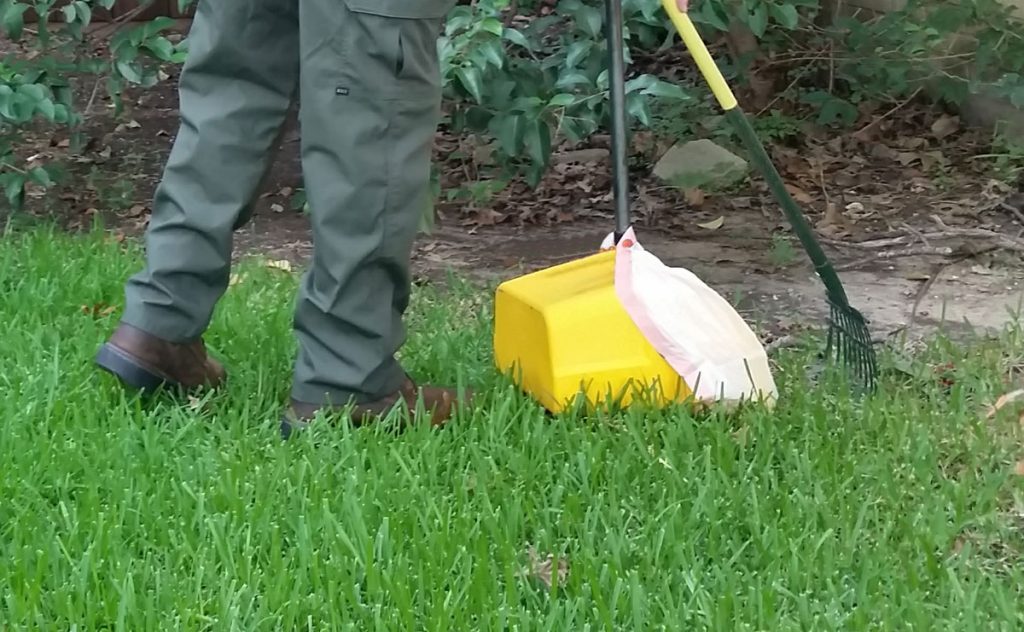
What Happens If Dog Waste Is Left in the Yard?
It doesn’t just disappear. Here’s a rough timeline of what tends to happen, though exact speed depends on weather and moisture.
- The first day or two: The waste is fresh and smelly. Flies find it quickly in warm weather.
- After several days: The surface dries and starts to break down. In dry desert conditions, dried waste can crumble and scatter, which makes it harder to see and pick up.
- After a week or more: Parasite eggs that weren’t infectious when the waste was fresh may begin to develop. One county veterinary public health document notes that roundworm eggs start to become infectious around seven days after they’re passed.
- After weeks or months: The waste is gone from view, but eggs and pathogens can remain in the soil. Public health sources say roundworm eggs can survive in soil for years.
- When it rains: Monsoon storms can wash waste across the yard, into low spots, or toward drains.
So the “it broke down, so it’s fine” idea is a common misconception. What’s left may not be visible, but it can still matter.
Can Dog Poop Make Your Yard Unhealthy?
Yes, though how much depends on your dogs, your yard, and who uses it.
What can be in dog stool: Health agencies list roundworms, hookworms, whipworms, Giardia, Salmonella, E. coli, and other organisms among the things that can be found in dog waste. Not every dog carries all of these, and many healthy dogs carry none. But you usually can’t tell by looking.
How people are exposed:
- Children putting hands or toys in their mouths after playing on the ground
- Walking barefoot (hookworm larvae can penetrate skin)
- Gardening or handling soil
- Tracking waste into the house on shoes
Who’s most at risk: Young children and people with weakened immune systems are more susceptible than healthy adults.
For your dog: Some parasites can spread from contaminated ground back to dogs. That’s why a dog with a recurring stomach problem may need a yard cleanup along with a vet visit.
For the lawn: Waste can cause dead patches, especially when it’s concentrated in one spot and left in place.
What this doesn’t mean: It doesn’t mean every yard is a health hazard, or that one missed pile is an emergency. It means regular removal is a reasonable, low-cost way to lower risk. If you have specific health concerns, talk to your veterinarian or physician.
How Often Should Pet Waste Be Removed for Multiple Dogs?
More dogs means more waste, and the extra volume matters more than most people expect. Two dogs don’t just double the piles. They also tend to spread them across more of the yard.
A practical guide:
- Two dogs: Twice a week is a good baseline. If you only do weekly, add a quick midweek walk-through before the weekend.
- Three or more dogs: Twice weekly at minimum. Daily spot pickup helps, especially in a smaller yard.
- Large breeds: Count them as extra volume.
- Puppies and sick dogs: Clean up as soon as possible, since loose stool and parasites are more likely.
- Shared yards: If you have neighbors’ dogs or a fenced shared area, make sure everyone agrees on a schedule.
Many services charge a base rate for one dog and add a per-dog fee for each additional one, so adding a second weekly visit often costs less than people expect. Ask what the price looks like for your dog count.
Is Weekly Dog Poop Removal Enough?
For many households, yes. Weekly service is a common choice because it strikes a balance between cost and cleanliness. But “enough” depends on what you need the yard to do.
Weekly is often enough if:
- You have one healthy dog, or two small dogs
- The yard is large and the dogs don’t concentrate in one spot
- You’re comfortable doing a quick pickup if something needs attention
- No young children play in the yard daily
Weekly may not be enough if:
- You have three or more dogs, or large breeds
- Your yard is small, or you use it daily for entertaining or play
- Young children play on the grass
- A dog has diarrhea or a stomach problem
- Summer heat is making odor and flies a problem
- You want the yard company-ready at any time
A middle path: Many people use weekly professional service and handle any obvious piles themselves midweek, or add twice-weekly service in summer.
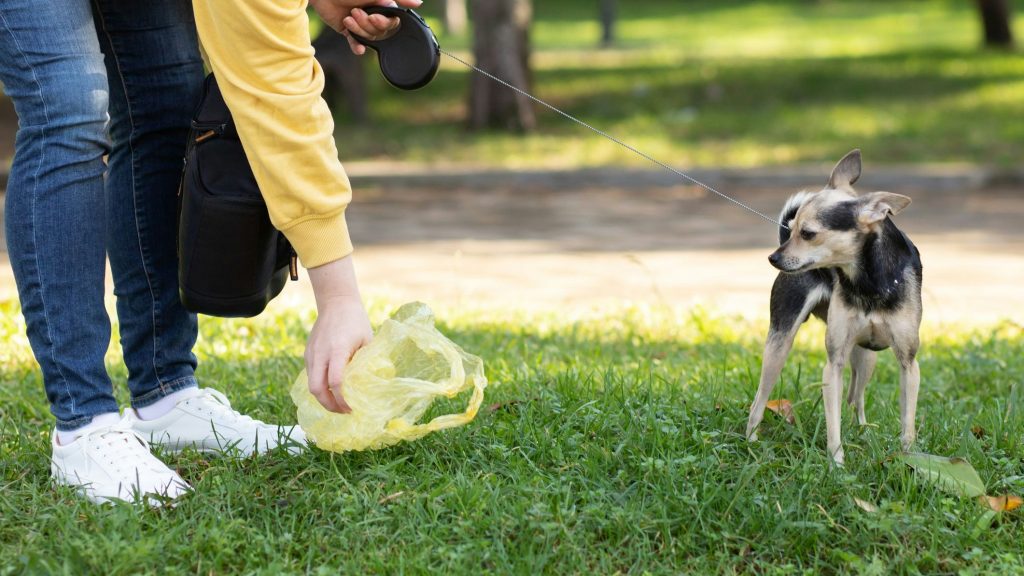
Seven days is the outer edge, not a target. If you’re at the limit, small changes like adding a spot pickup can make a difference.
How Does Professional Poop Scooping Work?
Details differ by company, but the process is usually straightforward.
- Get a quote. You share your address, number of dogs, yard size, and desired frequency. Some companies quote by phone, others online.
- Set the schedule. You choose weekly, twice weekly, every other week, or another plan. Some services offer one-time cleanups as well.
- Plan for access. The company needs to know about gates, codes, locks, and where your dogs will be during the visit. Ideally you’ll keep dogs inside or secured while the tech is in the yard.
- The visit. The technician walks the yard, often in a methodical pattern so small or hidden piles aren’t missed, and picks up all waste.
- Bagging and disposal. Waste is bagged and removed. Rich Dog, for example, states that it double-bags waste and disposes of it properly. Ask any company where the waste goes and how it’s handled.
- Notification. Many services notify you when they’ve arrived or finished, and some send a note if there was a problem, like a locked gate.
- Optional extras. Some offer deodorizing or sanitizing treatments, which can help with odor between visits. Ask what products are used and whether they’re safe for pets and kids.
A note on first visits. If the yard hasn’t been cleaned in a while, an initial cleanup may take longer and cost more than a regular visit. Ask up front how the company handles that.
What Is the Difference Between DIY Cleanup and a Pooper Scooper Service?
Both can work. The right choice depends on your time, budget, and how consistent you can be.
| Cost | DIY Cleanup | Pooper Scooper Service |
| Cash cost | Low, mostly bags and a scooper | A monthly fee |
| Time | Roughly 15 to 30+ minutes a week, depending on the yard and dogs | None from you |
| Consistency | Depends on your schedule and motivation | Set schedule |
| Thoroughness | Varies, especially in larger yards or with tall grass or rocks | Usually methodical, but ask |
| Weather and heat | You handle it | The tech handles it |
| Best for | One dog, a small yard, someone who doesn’t mind the chore | Busy households, multiple dogs, larger yards, travel, or physical limitations |
| Watch out for | Skipping weeks, missing scattered piles | Unclear contracts, missed visits, inconsistent techs |
What does a service cost? Published national guides from 2026 put weekly service for one dog at roughly $10 to $30 per visit, or about $40 to $110 a month, with additional dogs costing a few dollars more per visit or roughly $5 to $20 more per month. One-time cleanups are often listed at $40 to $150 or more, depending on yard size and how long it’s been. These figures come from different sources with different methods, so treat them as a ballpark and get a local quote.
A hybrid approach works well for some: professional service on a regular schedule, and a quick pickup before you have guests.
What Should You Look for in a Dog Poop Removal Service?
Compare companies on more than price. Here’s a checklist.
Scheduling and flexibility
- Weekly, twice weekly, and every other week options
- Reliable routes and arrival windows
- A clear policy for weather delays and missed visits
Contract terms
- Is there a contract, or is it month-to-month?
- How do you pause or cancel?
- Is there a free first visit or trial?
Pricing clarity
- What’s the base rate, and how does it change with more dogs?
- Is there an extra charge for a large yard, front and back, or an initial cleanup?
- How and when are you billed?
Handling and hygiene
- Are tools sanitized between yards so waste isn’t tracked from one property to the next?
- How is waste bagged and disposed of?
- Do they leave gates as they found them?
People and trust
- Are technicians trained and background-checked?
- Will you get the same person regularly?
- Can you reach someone if there’s a problem?
Communication
- Do they notify you before or after visits?
- How do they handle gate issues, dogs left in the yard, or special instructions?
Extras that matter to you
- Deodorizing or sanitizing options
- Commercial or HOA service, if relevant
- Service in your area
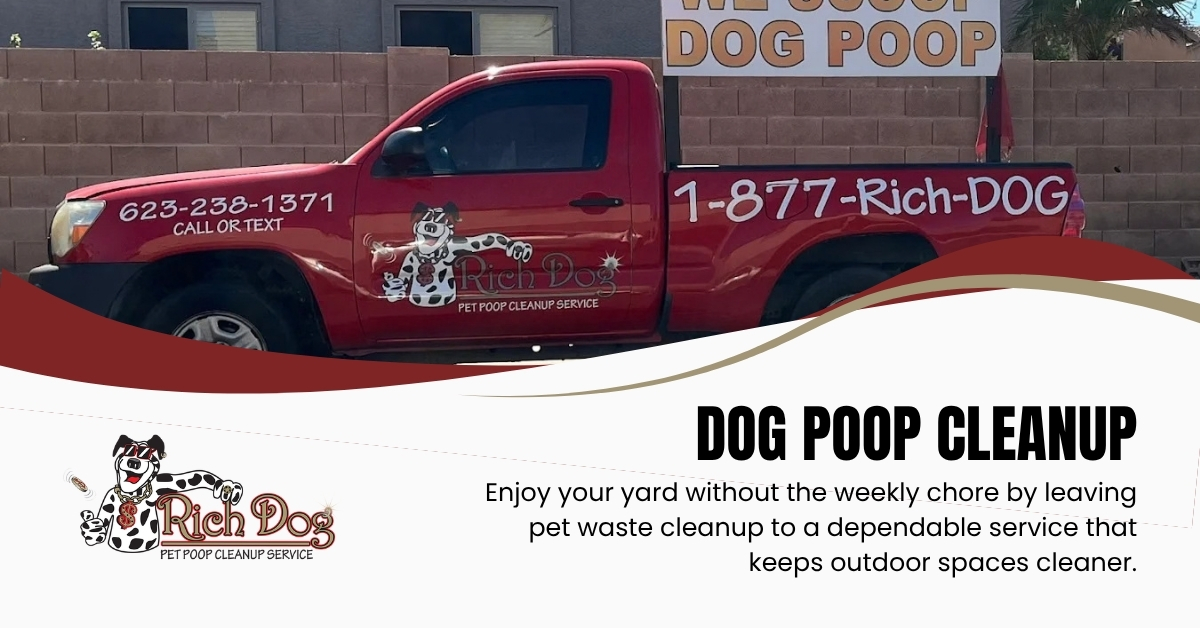
Rich Dog, a Surprise-based service, lists weekly, bi-weekly, and monthly options on its site, along with deodorizing, no contracts, arrival notifications, background-checked staff, and sanitized equipment. Whatever company you’re considering, ask for the details in writing so you know exactly what you’re getting.
How Can Regular Yard Cleanup Make Outdoor Spaces More Enjoyable?
This is where the benefit shows up in daily life.
- You use the yard more. No scanning the ground before letting kids or guests outside.
- Barefoot is an option again. A yard you can walk across without watching your step is a different space.
- Less odor. Your patio, windows, and outdoor furniture stay fresher, especially in summer.
- Fewer flies. Removing waste removes a main attraction for them.
- A healthier lawn. Less concentrated waste means fewer dead spots.
- Easier hosting. Backyard get-togethers and holiday gatherings don’t need a last-minute scramble.
- More time for your dog. Instead of spending weekend time on cleanup, you can play fetch or go for a walk.
- Less friction at home. Nobody has to argue about whose turn it is.
- Better neighbor relations. Especially in tight neighborhoods or HOA communities.
For Arizona yards in particular, a consistent routine helps in hot months when you’d rather not be outside longer than necessary, and it prevents the “we’ll get to it after the monsoon” backlog.
Frequently Asked Questions
Can I flush dog poop or put it in the compost?
Flushing is not generally recommended without checking local guidance, and most home and commercial composting isn’t suited to dog waste because pathogens may survive. Bag it and place it in your trash unless your city or sanitation provider says otherwise.
Is it okay to bury dog poop in the yard?
Burying doesn’t eliminate the organisms in it, and it can contaminate soil, especially near gardens or drainage. Most public health guidance recommends bagging and trashing it instead.
Does dog poop work as fertilizer?
No. It isn’t the same as livestock manure, and it can harm grass and introduce pathogens. It shouldn’t be used on lawns or gardens.
What if my dog has diarrhea or is sick?
Clean it up promptly, wash your hands, and talk to your veterinarian. Let your service know if there’s an ongoing issue so they can handle it appropriately.
Do I need to be home during service?
Usually not, as long as the tech can access the yard and your dogs are secured. Ask the company about gate locks, codes, and pets.
What if it rains or the weather is extreme?
Ask how the company handles storms or extreme heat. Some reschedule, and others add extra time to the next visit.
Can I try a service without a long commitment?
Many companies offer month-to-month plans or an introductory visit. Ask whether there’s a contract and how cancellation works.
Does professional scooping cover cats or other pets?
It depends on the company. Some handle other pets or wildlife waste, and others focus on dogs only. Ask before you book.